Welcome, friends. If you want to learn more about first century Rome and other details about how this setting affects my books, this is the place to find out more about my Roman research.
What did ancient Rome look like?
Envisioning Roman houses
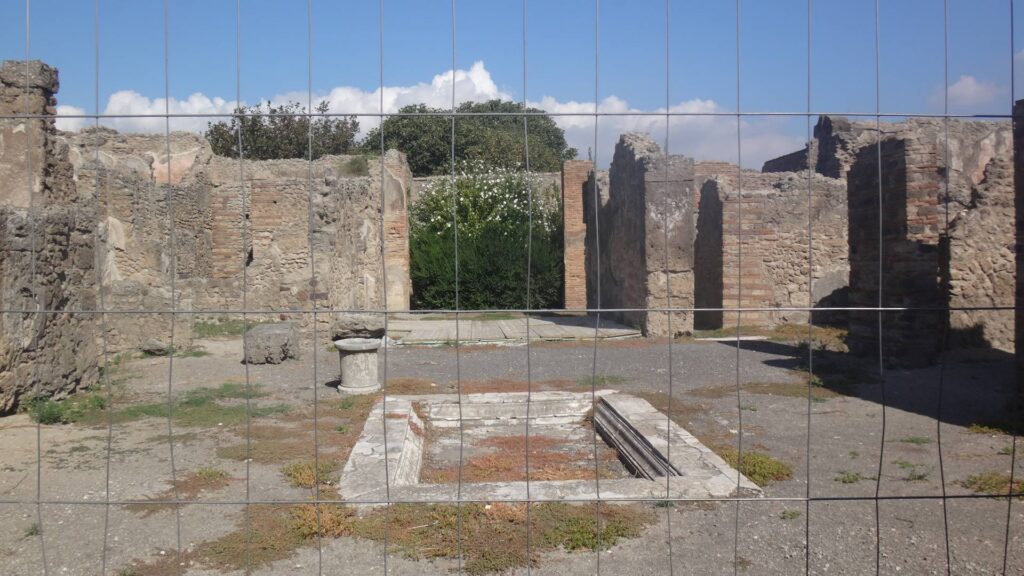
This photo shows a view through an atrium of a large house. The shallow pool in the foreground is the impluvium to catch rain water from the hole in the atrium roof above it. Looking through the room, visitors could get a glimpse into the peristyle beyond.
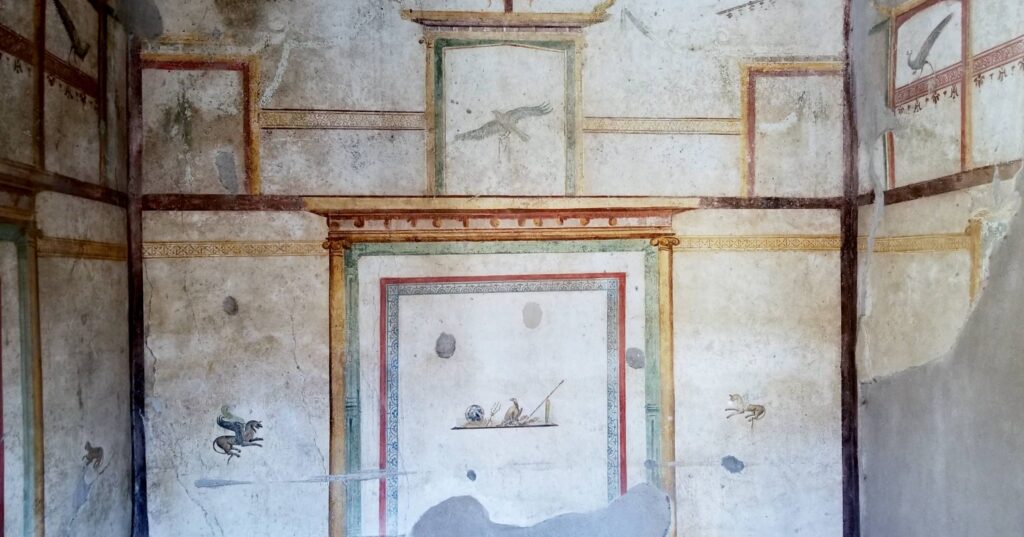
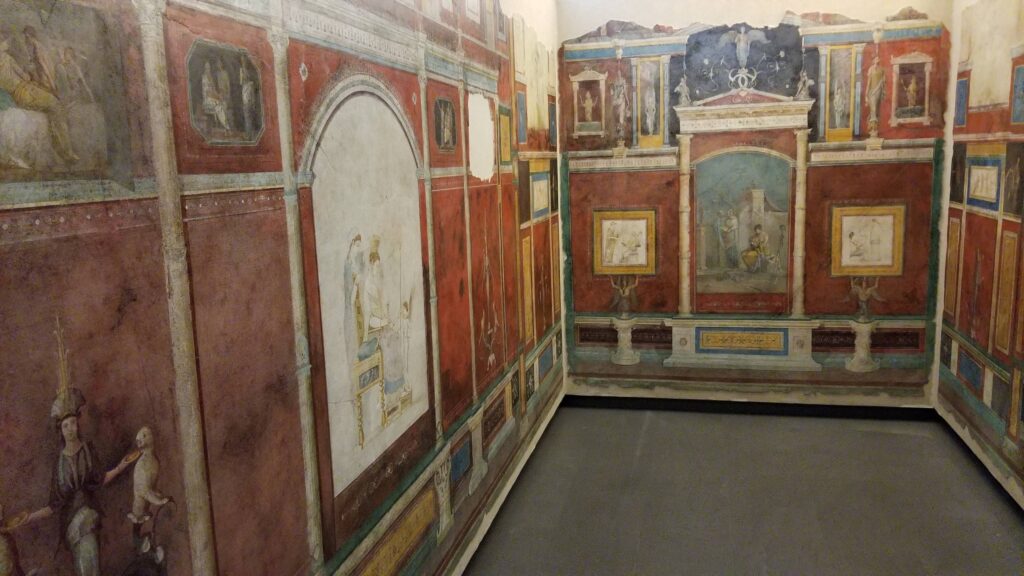
Two examples of rooms with frescoes. Note how the paintings are done in panels, often with faux architectural elements separating them.
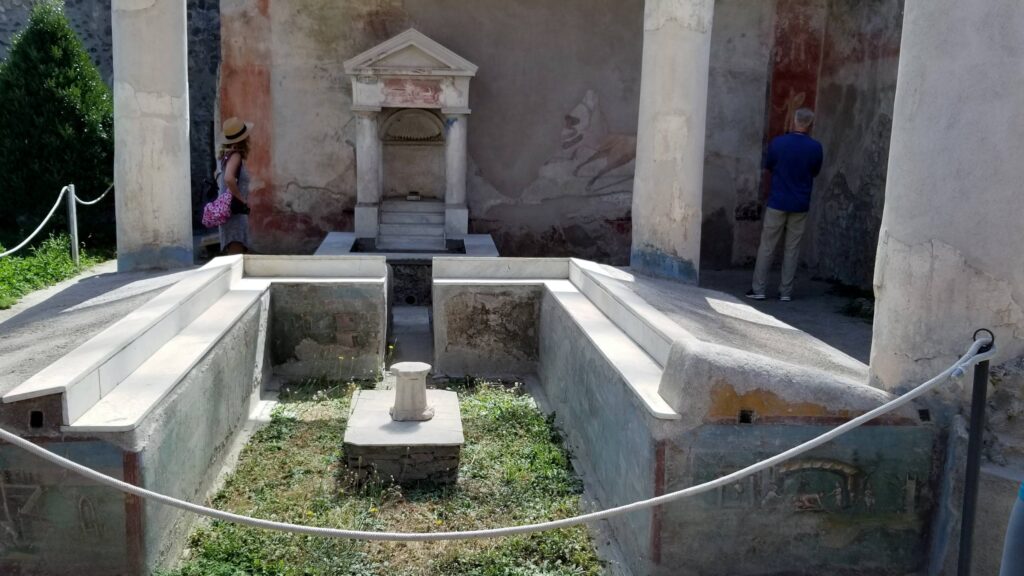
An example of a peristyle courtyard with built-in dining couch bases for al fresco dining. Cushions would be placed on the dining couches and a table top with food would b placed on the pedestal in the middle.
A few more details: A colonnade bordering a peristyle. A detail of a realistic garden-scene fresco. An impressive mosaic floor.
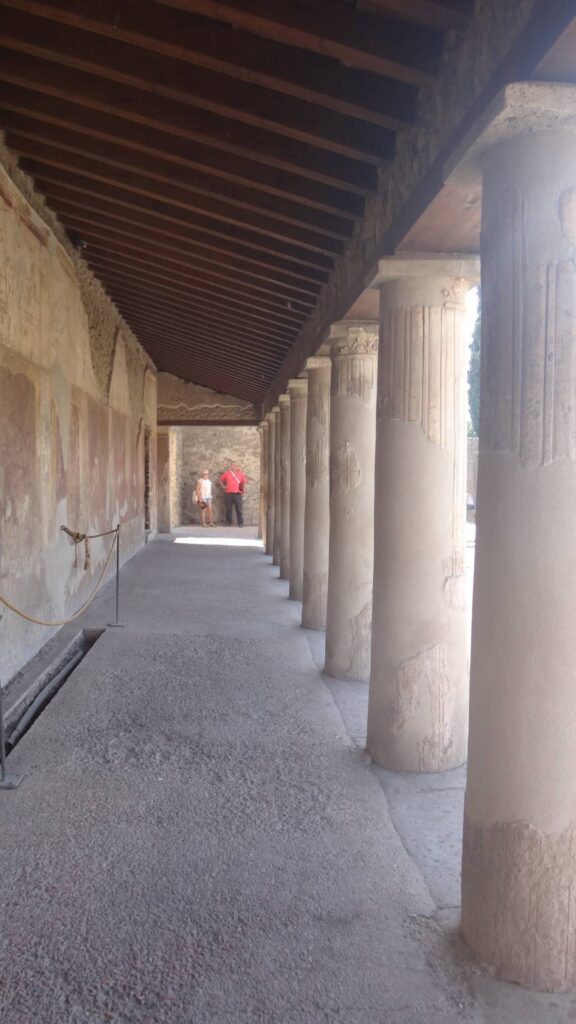
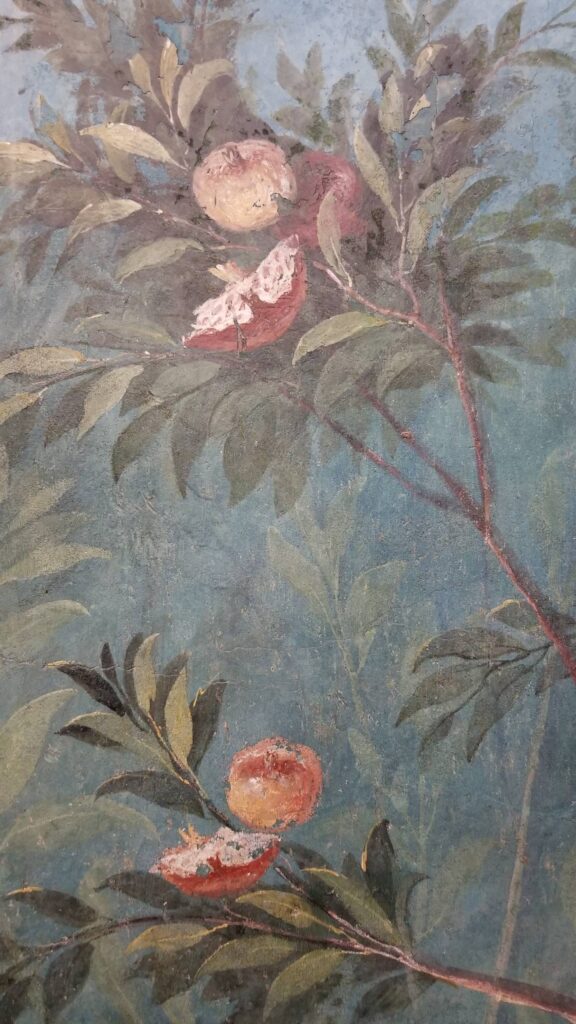
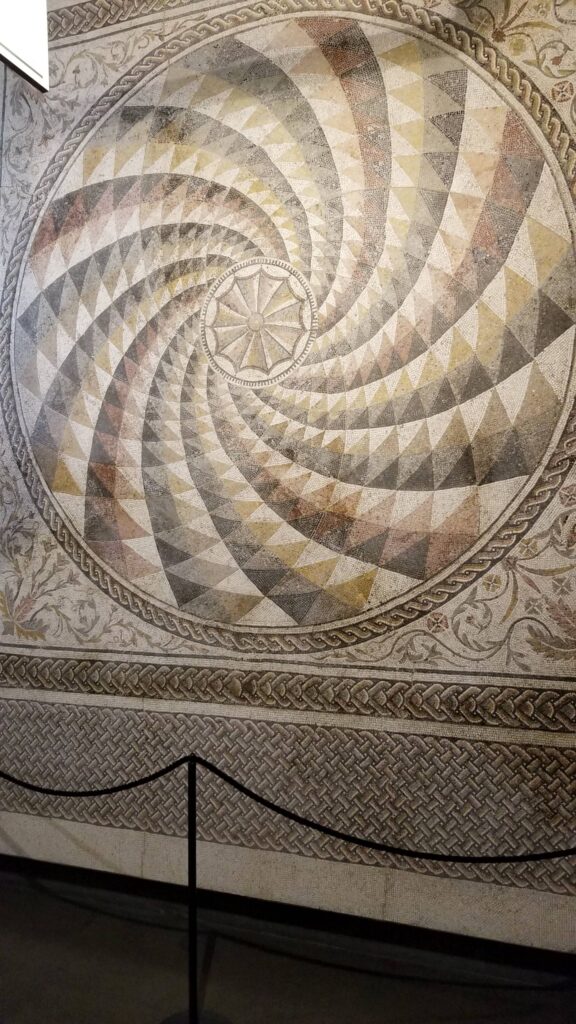
Snippets of Daily Life
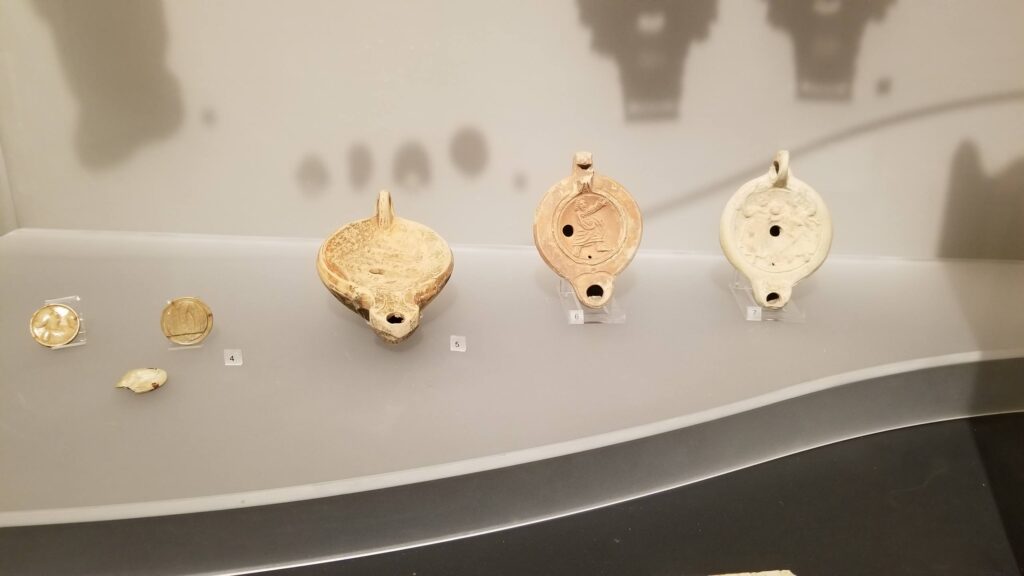
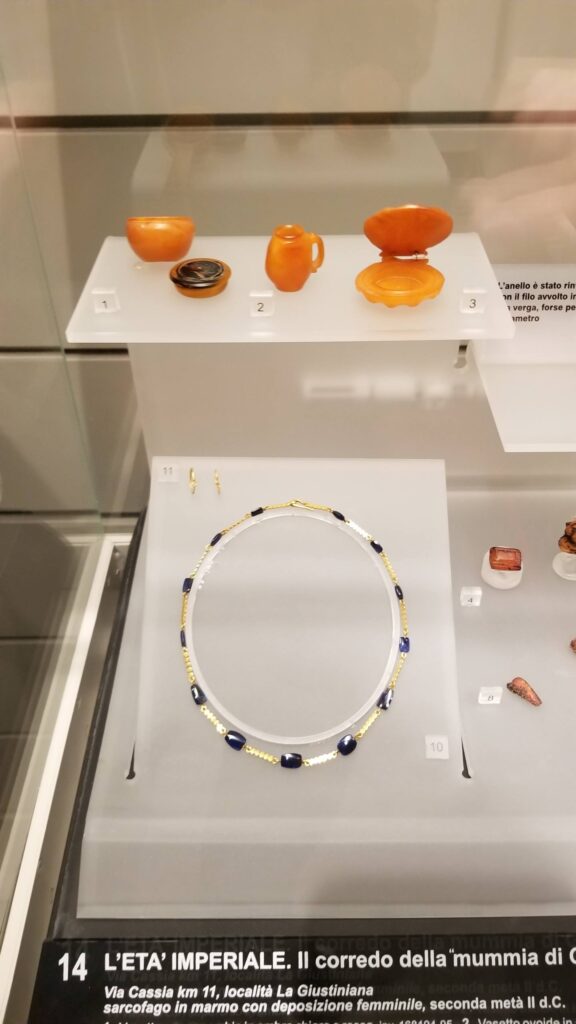
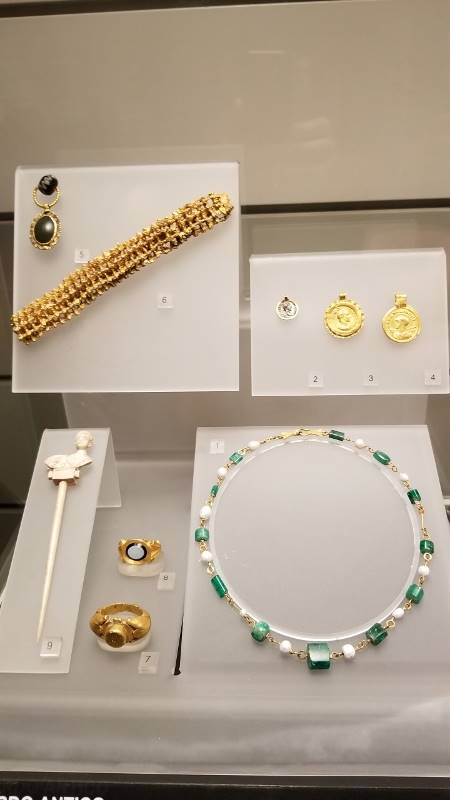
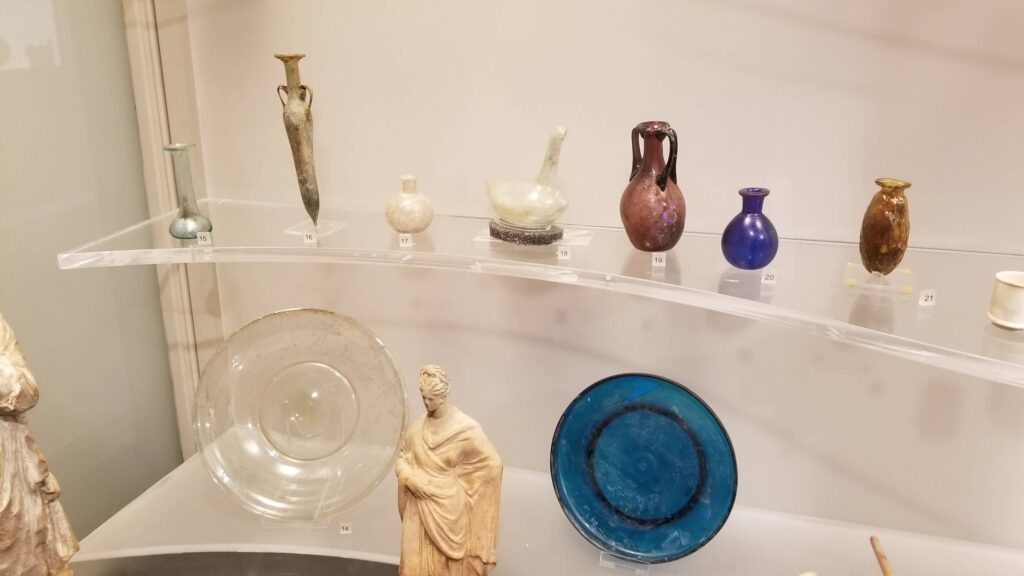
Some common household items. Clay oil lamps. Dainty cosmetic jars and examples of jewelry. The bottom photo shows tiny glass vessels that might have held perfume (or poison).
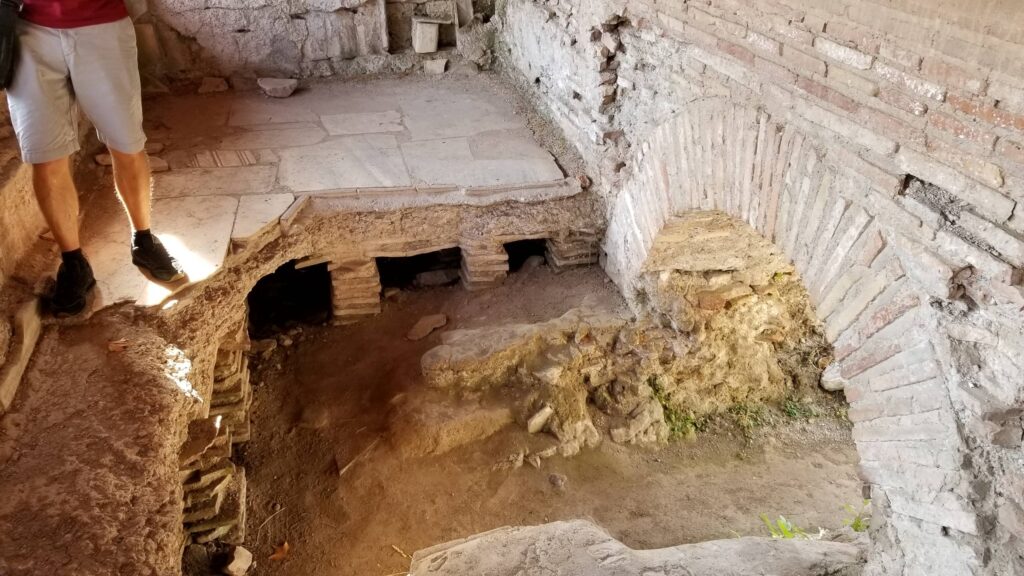
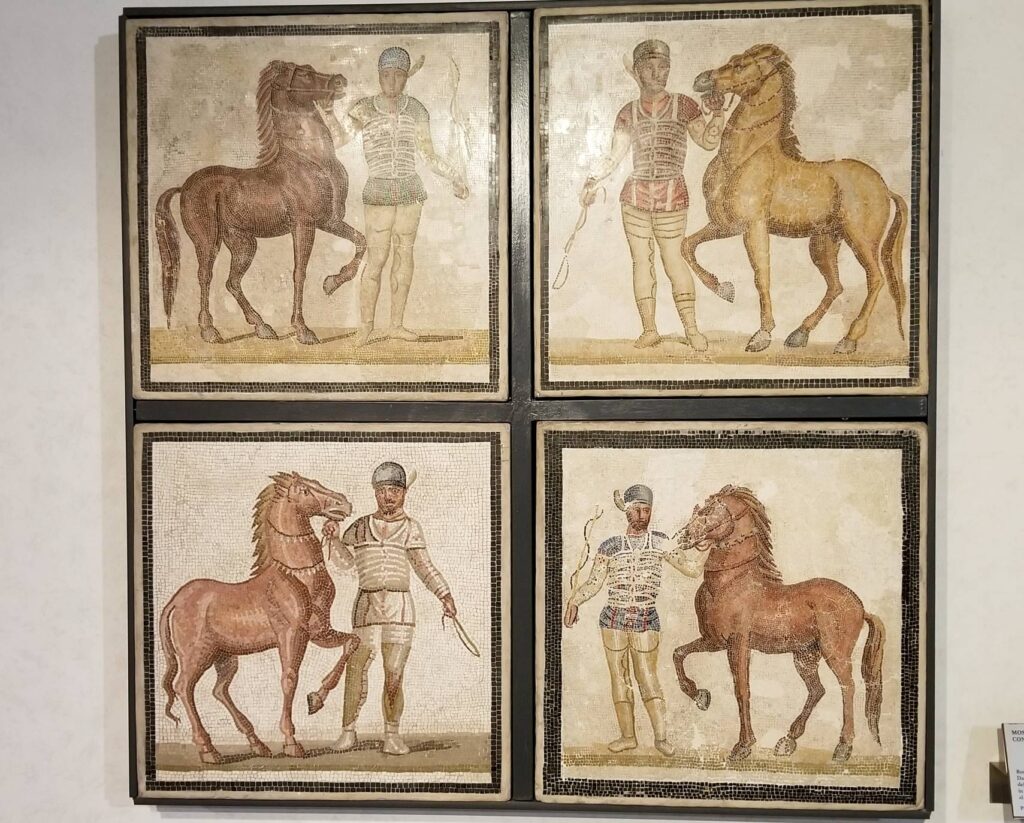
The photo below shows a floor raised on brick pilings. When a fire was kept in the space underneath, it warmed the floor. This detail is from a public bath complex in Ostia. And finally, a mosaic depicting the four chariot racing teams—the Greens, Reds, Whites and Blues. Romans were as fanatical about their favorite team as football fans are today. (And you found the same four teams across the empire.)
Envisioning Roman streets
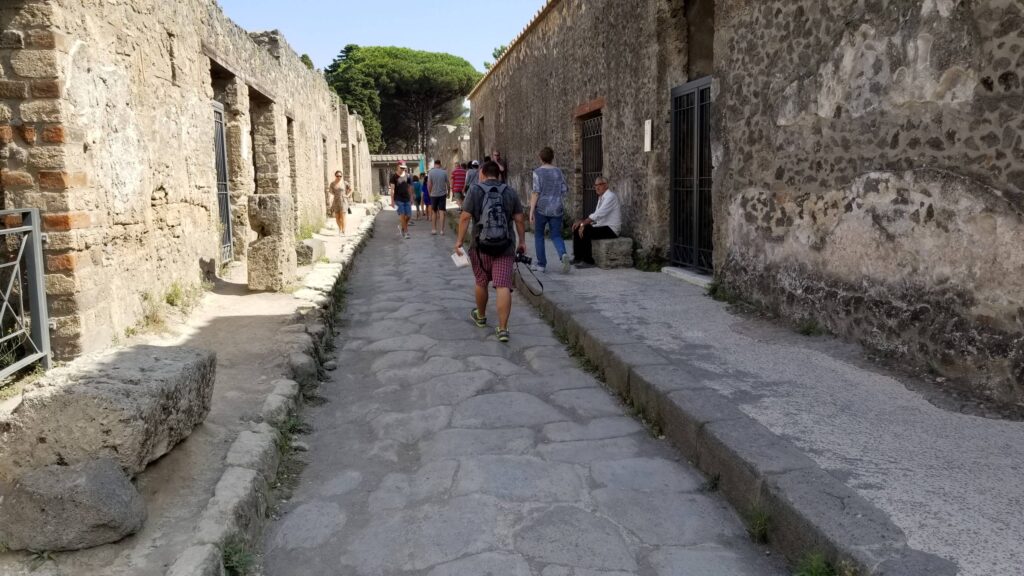
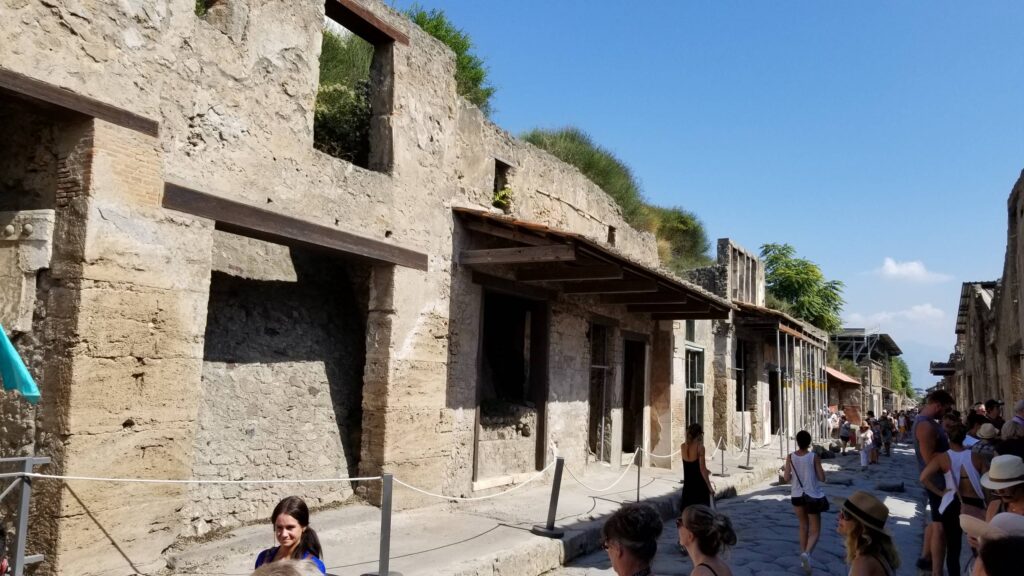
Some streets in Pompeii. Notice how the ruins are only the first floor of what were once multi-story buildings. Typically, shops would line the street with apartments in the floors above.
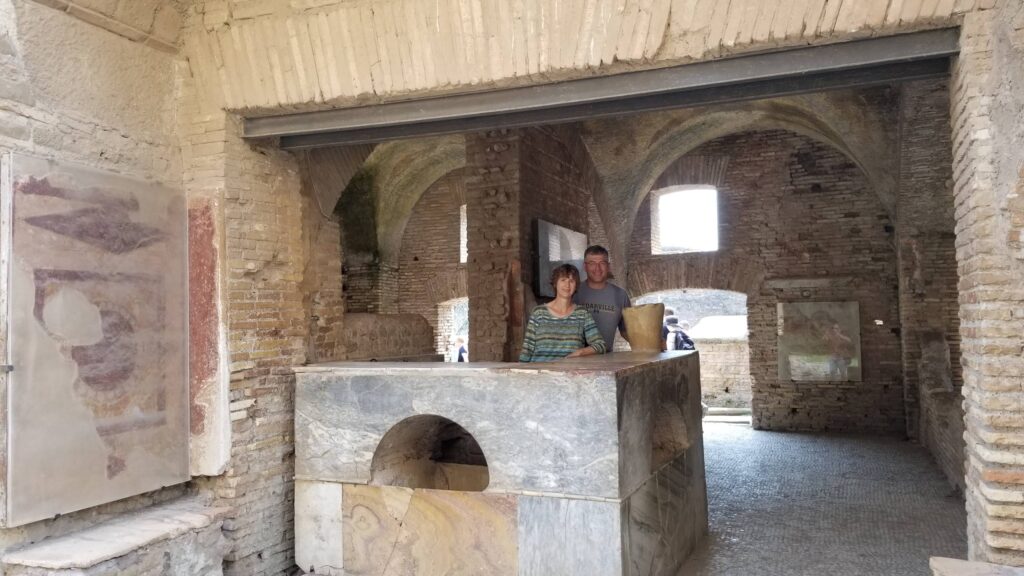
Here we are behind the counter of a restaurant. We saw many marble-clad counters like this with circular recesses for holding pots of stew or soup. Most residents of Rome lived in cramped apartments with no cooking facilities, so they were forced to rely on restaurants or street vendors for cooked food.
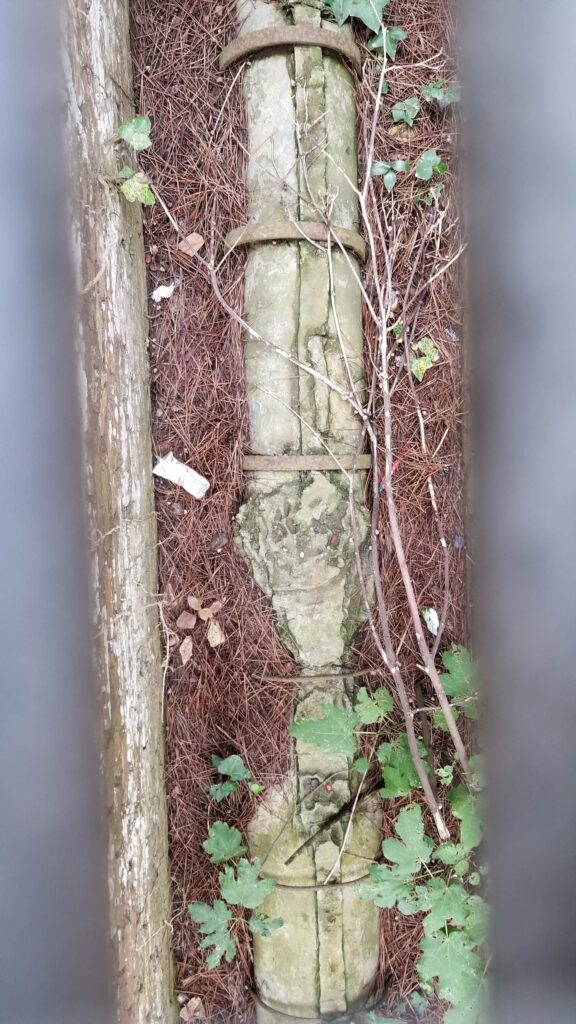
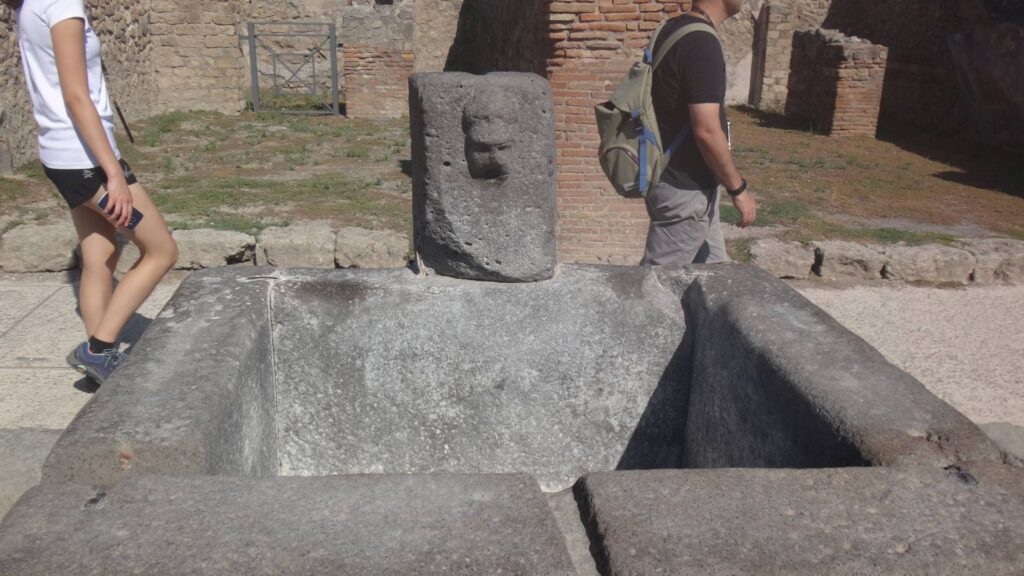
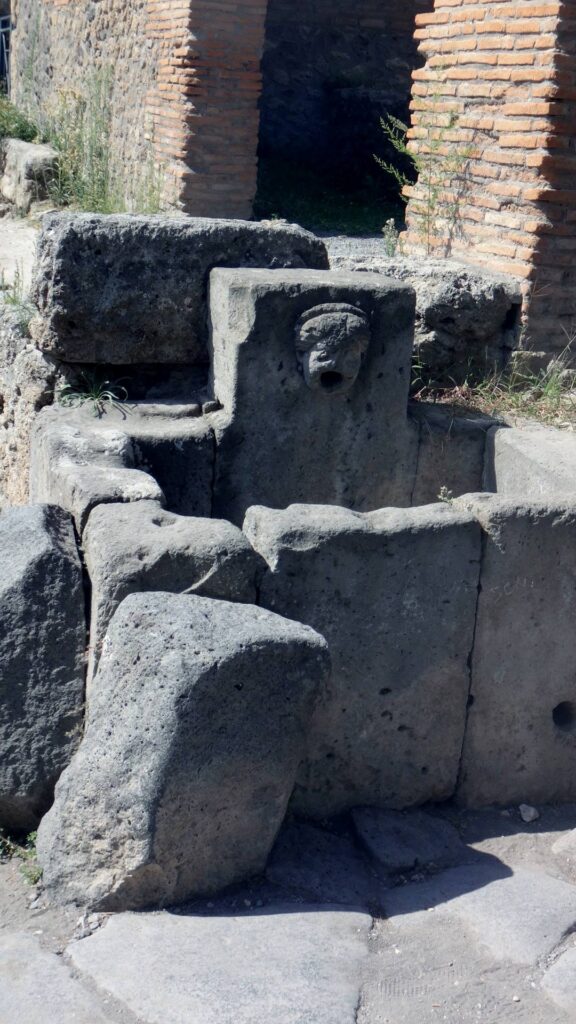
The Roman water supply: A lead water-pipe, still embedded in the ground. And two views of public fountains located in street intersections. These are from Pompeii, but Rome had hundreds of similar fountains. They were the primary water source for most residents of the city.
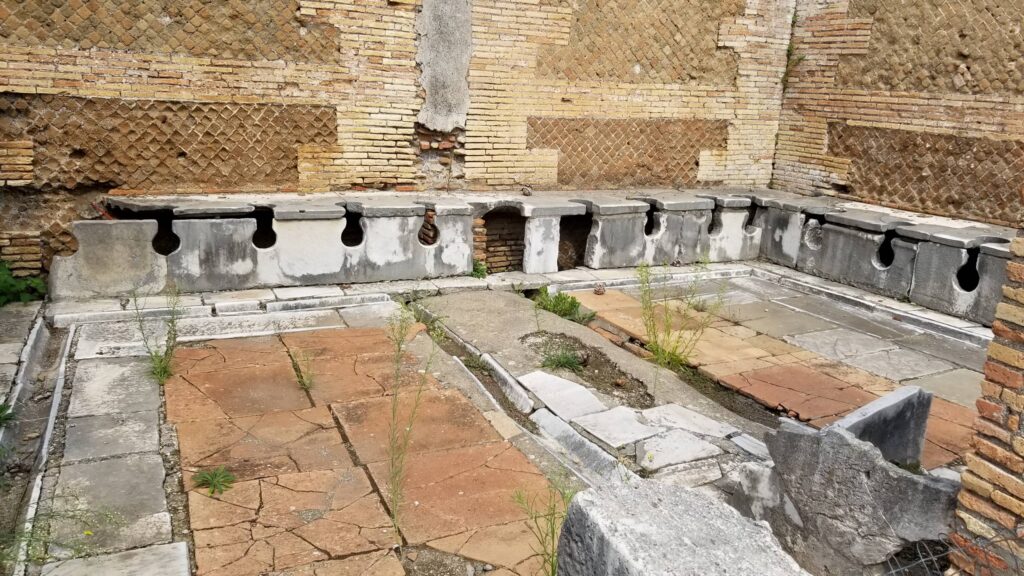
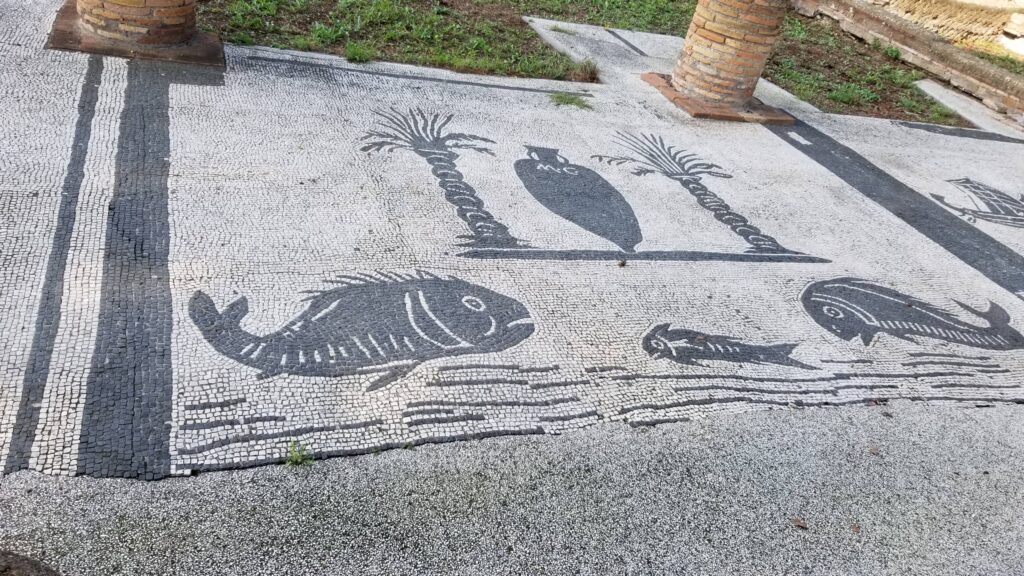
A large public toilet room. As you can see, there was no privacy. And a mosaic from the Square of the Guilds. These mosaics in this large square located in the port city of Ostia represent various businesses. The one pictured may indicate an importer of garum (fermented fish sauce).
Monumental buildings
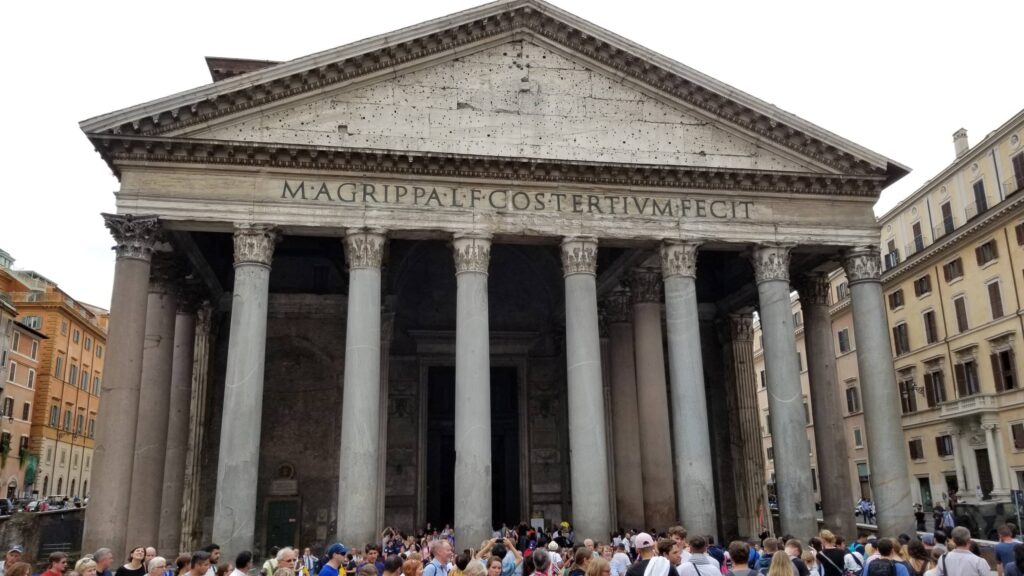
Roman cities were filled with huge buildings, such as temples, bathing complexes, theaters and arenas. Below is the Pantheon, still intact after twenty centuries. This front portico gives you scale for how large it was. And some buildings in Rome were much bigger than this.
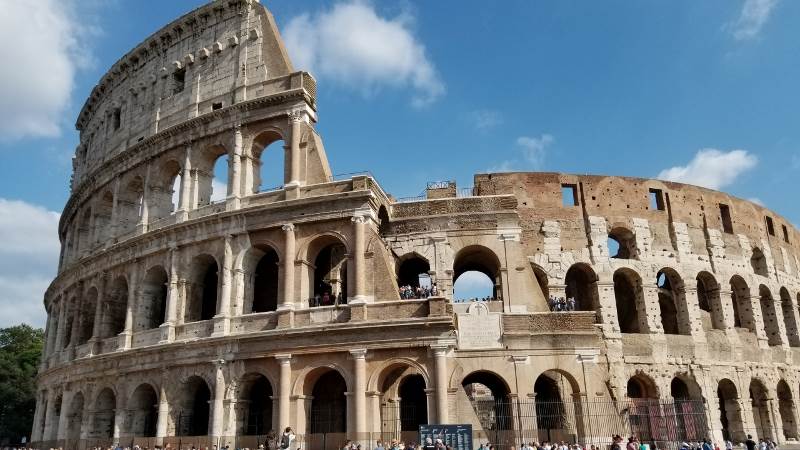
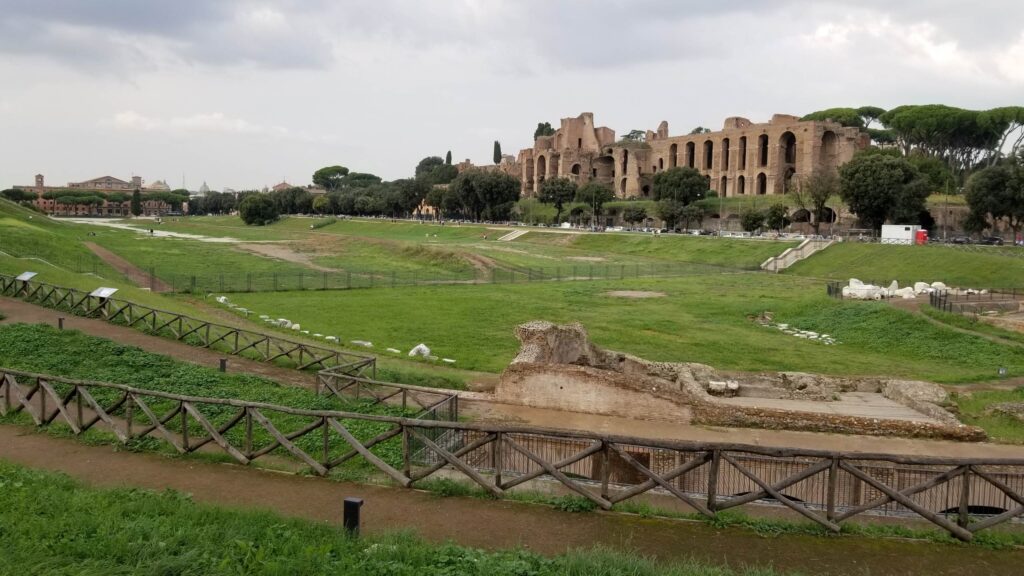
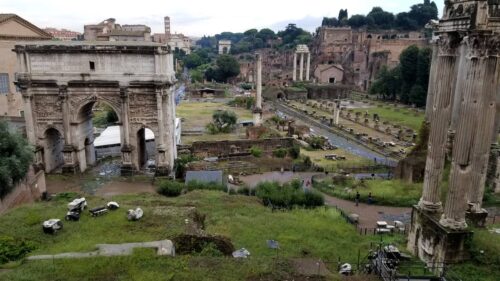
Three other examples of monumental structures: The colosseum. (Officially called the Flavian Arena. It wasn’t built yet when Livia roamed the streets of Rome). The vast Circus Maximus where chariot races were held. This view looks at the space long-ways, you’ll have to imagine the stands running down each side. And finally, a view of the old (original) forum.
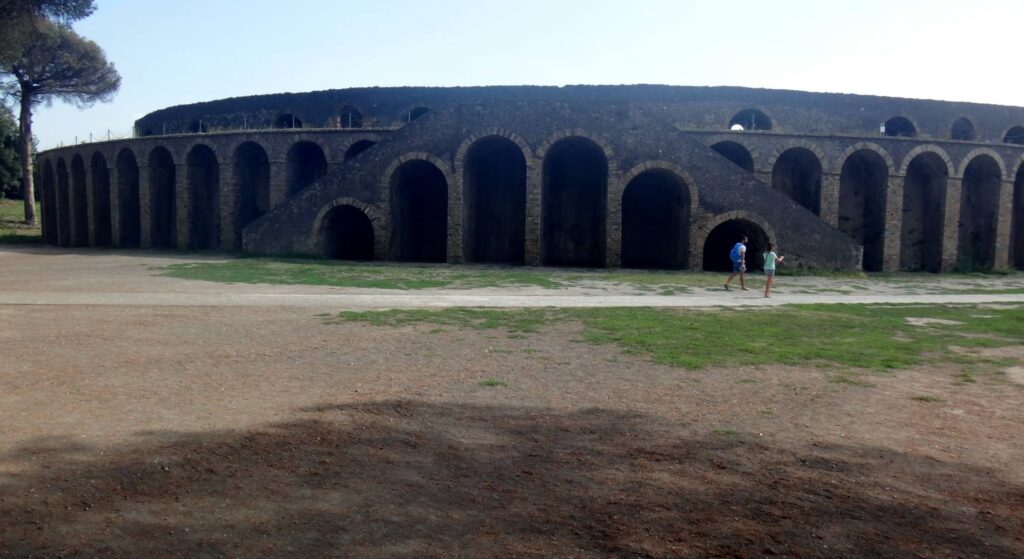
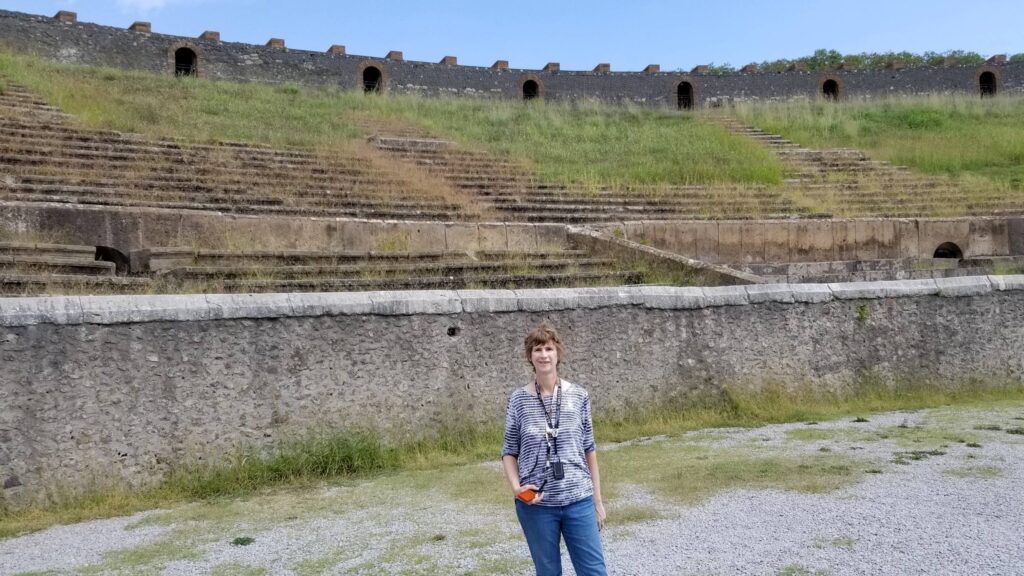
Rome wasn’t the only city with huge buildings. This is the arena at Pompeii. It’s smaller than the Colosseum, but it’s more intact. Also, unlike the Colosseum, this arena did exist when Livia’s stories take place. Exterior and interior views.
More Roman Research: Miscellaneous Facts
How much freedom did women have back then? Is it feasible for a female to be a sleuth in that period?
The Roman Empire was very much a patriarchal society. That being said, women enjoyed more rights during the Roman Empire than they’ve been allowed in most of the centuries leading up to modern times. For example, women could inherit property, run businesses, initiate lawsuits, and divorce their husbands. A clever and determined woman like Livia could find ways to investigate a mystery, although she would encounter obstacles a male wouldn’t face.
I knew there would be limits to what a young female sleuth could do without ruining her reputation, so from the start I knew she would need male allies to collect information from places or persons inaccessible to her. She will be collecting those allies as the series progresses.
I have taken my inspiration for Livia from a host of other female sleuths who solve crimes despite the constraints of their historical eras. A few examples include: Lindsey Davis’s Flavia Albia, Elizabeth Peter’s Amelia Peabody, Margaret Frazers’s Dame Frevisse, and Jane Finnis’s Aureila Marcella. (You might notice that two of the sleuths I mentioned also thwart crime during the Roman Empire. So Livia is in good company.)
Did the Romans actually keep cats or dogs as pets? What other pets did they have?
I’ve seen several mosaics featuring a dog and the phrase “beware of the dog” (cave canum in Latin). Dogs weren’t only used as watchdogs. I’m sure some ended up as beloved household pets, just as they are today. There
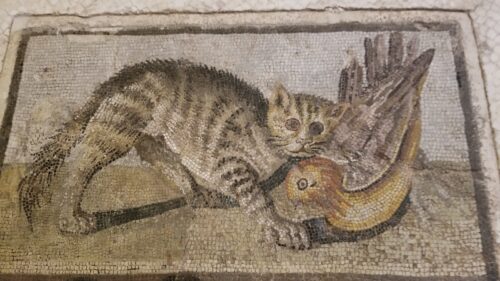
Cats were probably kept more for their mousing abilities than to be pets, but they were definitely around. I’ve seen several ancient mosaics featuring cats, and also a tombstone of a child holding a cat. One mosaic shows a cat stalking birds at a birdbath, which I think shows the artist’s sense of humor. As with modern society, some homeowners obviously had a sense of humor when it came to art.
Caged birds were popular pets in Roman times. The Romans also kept monkeys, and even snakes as pets. The wealthy sometimes collected whole menageries of exotic animals, everything from crocodiles to giraffes to lions.
This series begins in 47 AD. when Christianity is in its infancy. What was Christianity like at this time?
I intentionally set my novels before Nero began persecuting Christians. Thus, at this stage, the average Roman would see Christianity as a subset of Judaism.
Roman religious practices were about following the proper rites to do one’s duty and appease the gods. The virtues the Romans valued included strength, honor, dignity, wealth, and social prominence. Therefore, a belief system based on humility, serving the poor, and salvation by grace rather than works would not appeal to them—especially those who enjoyed wealth and social position.
I keep these cultural lenses in mind when I describe how Avitus, Brother Titus, or other Romans interact with Christian beliefs.
When dealing with historical settings, you must use the facts you discover as a skeleton and build a likely scenario from there. Here are some of the main facts we do know about Christianity in 47 AD.
- Acts 2:10-11 tell us visitors from Rome (both Jews and converts to Judaism) were present during Peter’s sermon at Pentecost. Some of these people could have taken their new faith in Jesus back to Rome from the very beginning. I imagine Pansa is one of these people.
- Later, in Romans 16:1-16, Paul greets 28 Roman Christians by name (including ten women). This tells us there were several churches in Rome before Paul set foot in Italy.
- Romans 16:14 says “Greet Asyncritus, Phlegon, Hermes, Patrobas, Hermas and the other brothers and sisters with them.” This is why I gave the leader of Livia’s house church the name Asyncritus. But since that name is complicated, I gave him the nickname Brother Titus. Also, Fountains and Secrets includes a character named Hermas (a weaver) who is a member of Brother Titus’s church.
- Most of the New Testament had not yet been written. And even after it was, it would have taken time for the various letters and gospels to spread throughout the empire. Therefore, I assume that early pastors such as Pansa and Brother Titus relied on what they’d been taught regarding Jesus and his ministry, along with any Old Testament books they could get their hands on.
- Scholars have identified bits of early Christian creeds embedded in several of the New Testament books. (See 1 Timothy 3:16, 1 Corinthians 15:3-5, Romans 1:2-4, and Philippians 2:5-11.) These verses give us a glimpse of the oral tradition passed on by the very earliest Christians.
- In addition, early church writings make it clear the Sermon on the Mount was a key text for early Christian belief and conduct. While the gospels were not yet written in 47 AD, the oral tradition on Jesus’s teachings would be, so I think it’s feasible Pansa and Brother Titus could teach the concepts contained in the Sermon on the Mount at this time.
- Finally, church tradition says Peter may have come to Rome as early as 51 AD. I may include him in a novel when I get to that year. We’ll see.
Have you tried any of the unusual ancient recipes you describe in the book?
A few. You can read more about that on my Roman Food Page here.